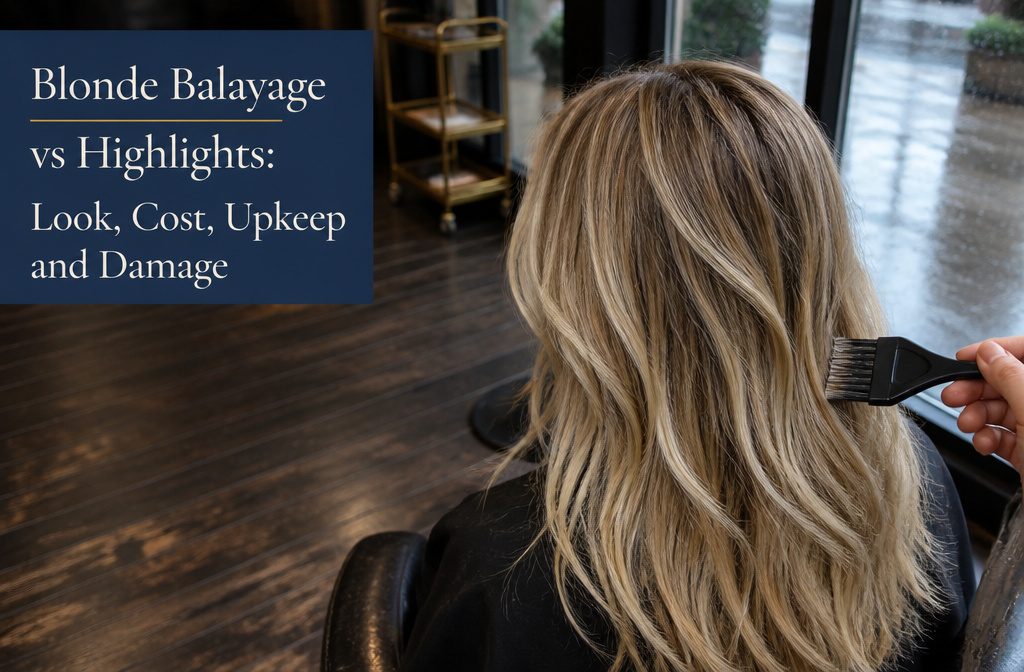
Balayage wins for most people: it needs a touch-up every 3–5 months, while highlights show regrowth in 4–6 weeks. The exception is brightness.
If you want bright, even blonde from the scalp down, foil highlights do that and balayage keeps the roots deeper. Foilayage, with foils at the face and painted color elsewhere, splits the difference.
Application and Placement
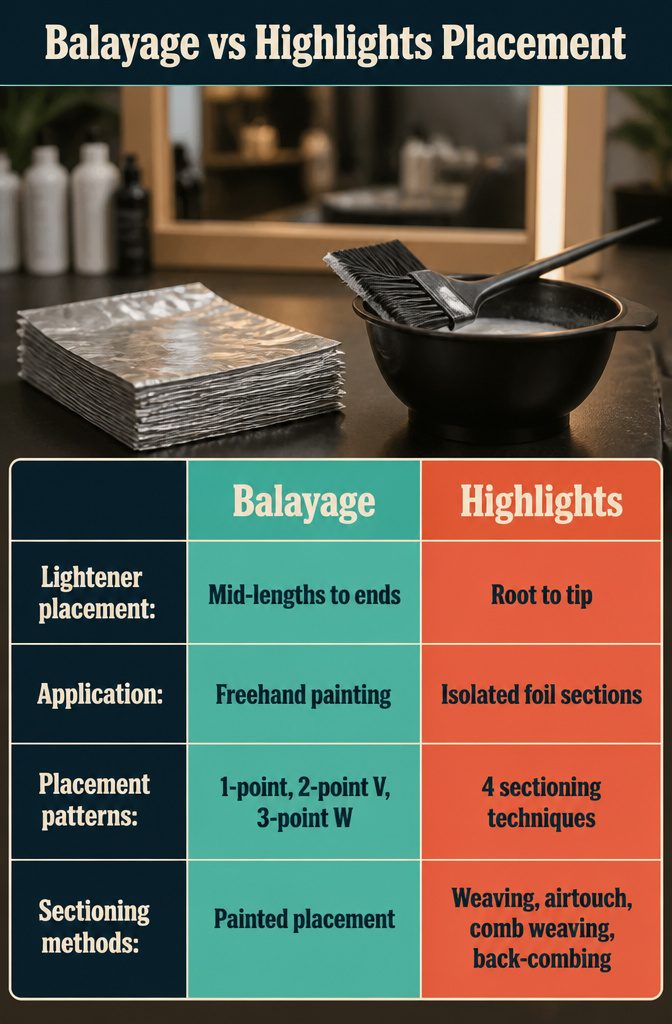
Balayage is French for "to sweep," and the method fits the name: the colorist paints lightener freehand, with color concentrated from mid-lengths to ends.
Highlights usually isolate sections in foils and carry lightener from root to tip. The origin is disputed, with claims ranging from Paris in 1965 to France in the 1970s.
Balayage placement comes in 1-point, 2-point (V) and 3-point (W) patterns. Highlights use 4 sectioning techniques: weaving, airtouch, comb weaving and back-combing.
The label alone does not tell you the method, because salon results can mix foils and painting.
Before booking, ask your stylist whether foils will be involved and where the lightener will start. That answer says more about your result than the menu name.
Result and Brightness
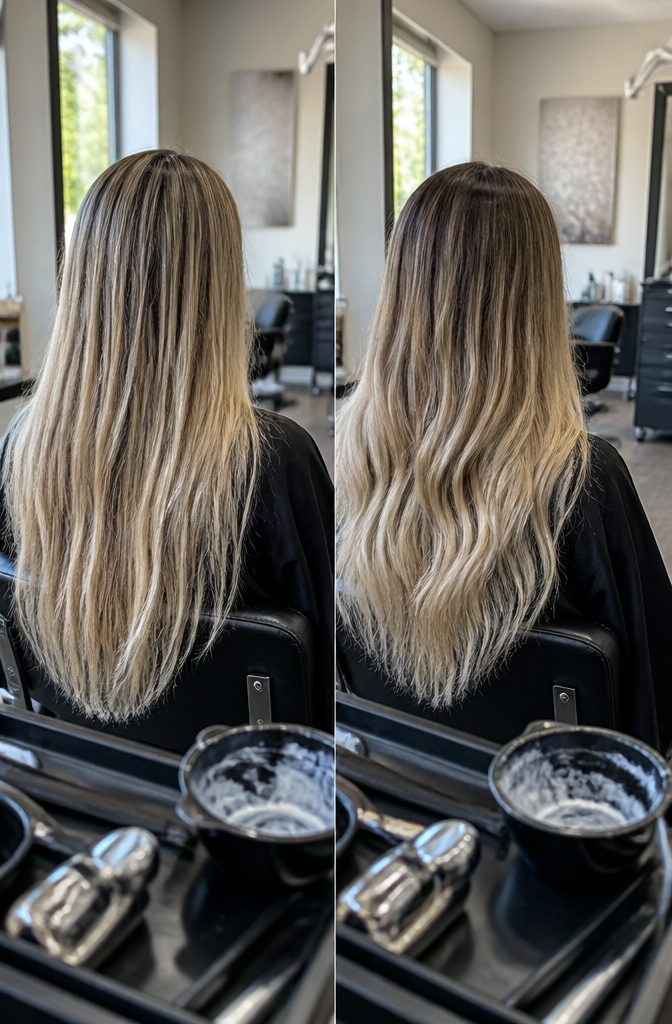
Foils saturate the strand from root to tip, so brightness starts at the scalp and reads as defined ribbons of light.
Balayage begins midshaft and lightens toward the ends, which keeps more depth near the roots. One colorist in Glamour puts the look this way:
Balayage looks "soft, blended, and more subtle with a gradual lightening effect," while highlights are "more structured and defined, with distinct lighter sections that start from the roots."
— Glamour
These are tendencies, not rules: foils can be fine and subtle, and painted color can be pushed bright. For a bright, even blonde, I’d choose highlights; for a lived-in, sun-kissed finish, balayage wins.
Grow-Out and Maintenance
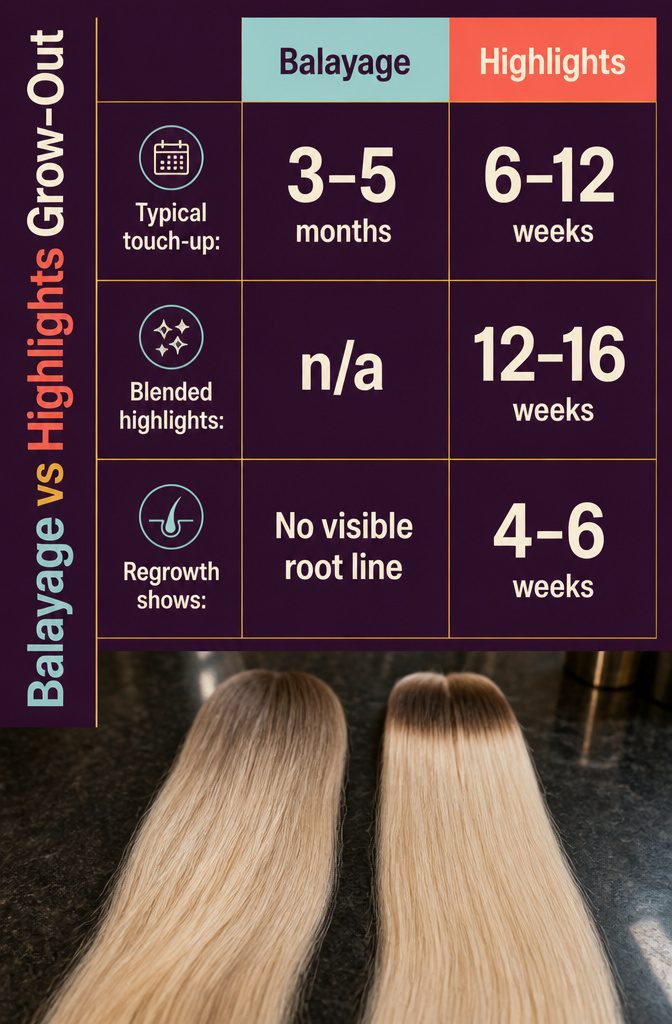
Balayage buys you months, highlights buy you weeks. These are the ranges that come up most for each.
| Balayage | Highlights | |
|---|---|---|
| Typical touch-up | 3–5 months | 6–12 weeks |
| Blended highlights | n/a | 12–16 weeks |
| Regrowth shows | No visible root line | 4–6 weeks |
Placement, contrast, tone and root blending all move those numbers. An extremely light, cool-toned balayage on a darker base can grow out as harshly as highlights.
Finely woven highlights with root blending can grow out softly. Close-set highlights need the most frequent visits.
If regrowth is what you dread, ask for soft placement and low contrast rather than just the word "balayage." I’d still book balayage for the longest gap.
Choosing by Hair and Color Goals
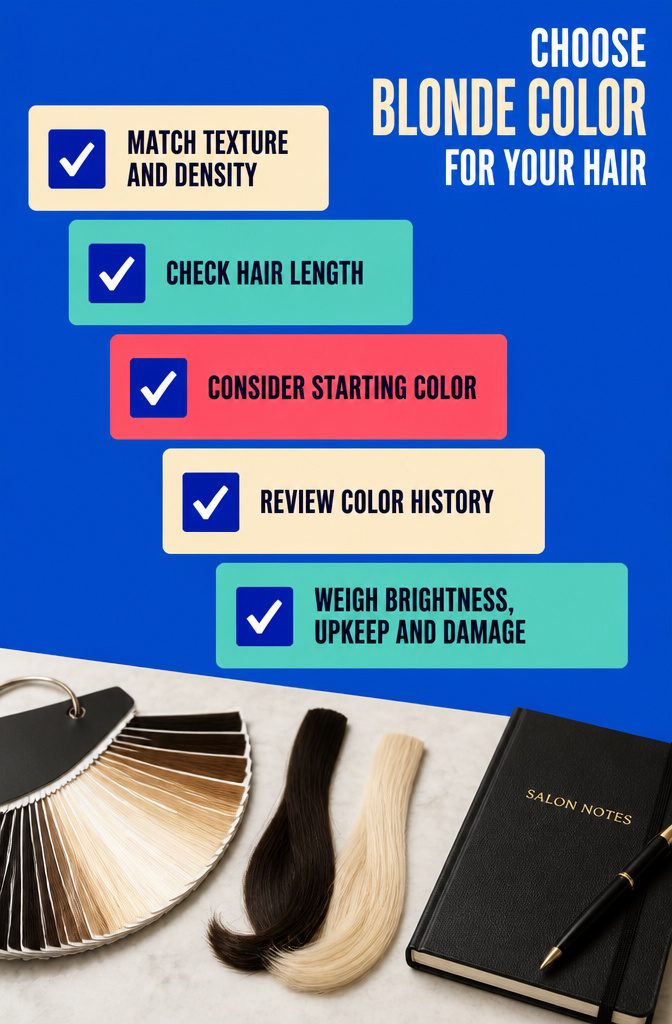
Your hair and your goal decide this, and these are the factors I’d weigh:
- Texture and density: Balayage suits fine, straight hair. Foil highlights break up thick hair and can make thin hair look fuller.
- Length: Balayage does its best work on medium to long hair.
- Starting color: Dark hair eases into lighter tones with balayage. Lighter bases take foil highlights well.
- Color history: Box dye and earlier color change how hair lifts.
- Brightness: Lighter means more upkeep and more risk of damage.
Natural level, previous color, existing highlights, porosity and elasticity are what a good colorist asks about first, followed by whether your goal can happen in one visit.
No technique wins for everyone, so let a stylist check your hair in a consult before you commit.
Cost and Time
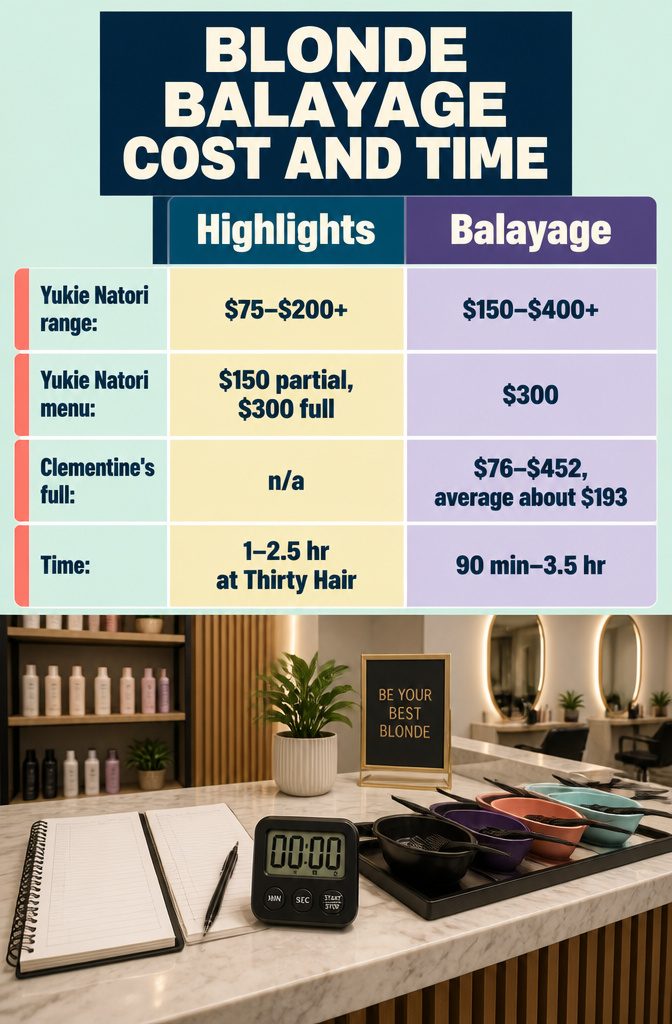
Salon pricing swings widely, so these are the published figures side by side, labeled by who posted them.
| Source | Highlights | Balayage | Time |
|---|---|---|---|
| Yukie Natori, range | $75–$200 or more | $150–$400 or more | Balayage 90 min–3 hr |
| Yukie Natori, menu | $150 partial, $300 full | $300 | n/a |
| Clementine’s | n/a | Full $76–$452 (average about $193); partial $101–$222 (average about $154) | Balayage 90 min–3 hr |
| Tangerine | n/a | n/a | Balayage 2.5–3.5 hr; highlights 1.5–2.5 hr |
| Thirty Hair | n/a | n/a | Highlights 1–2.5 hr |
Balayage costs more per visit, but fewer touch-ups can make it the cheaper choice over a year. For a lower price, beauty school services start at $85, against an average $300 salon price.
Damage and Aftercare
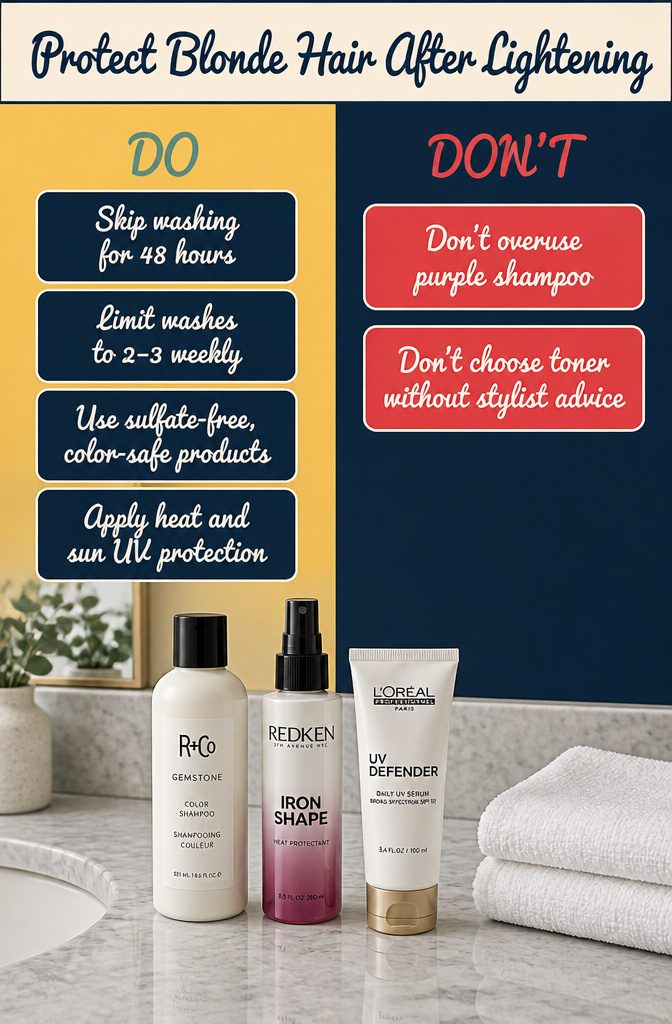
Balayage tends to be gentler because it doesn’t saturate the strand root to tip, but neither method is automatically easier on hair; heavy lightening is heavy lightening.
Skip washing for 48 hours, then limit yourself to 2–3 washes a week with sulfate-free, color-safe products: R+Co Gemstone Color Shampoo & Conditioner ($68), Redken Acidic Color Gloss or Color Extend Magnetics.
Use heat protectant every time and UV protection in the sun. L’Oréal Professionnel Metal Detox ($40) and IGK Offline 3-Minute Hydration Hair Mask ($38) are on my shortlist.
Purple shampoo like L’Oréal Professionnel Color Depositing Purple Shampoo ($44) calms brass on blondes, but the wrong tone or overuse can leave porous areas dull or uneven, so ask your stylist.
Foilayage and Hybrids
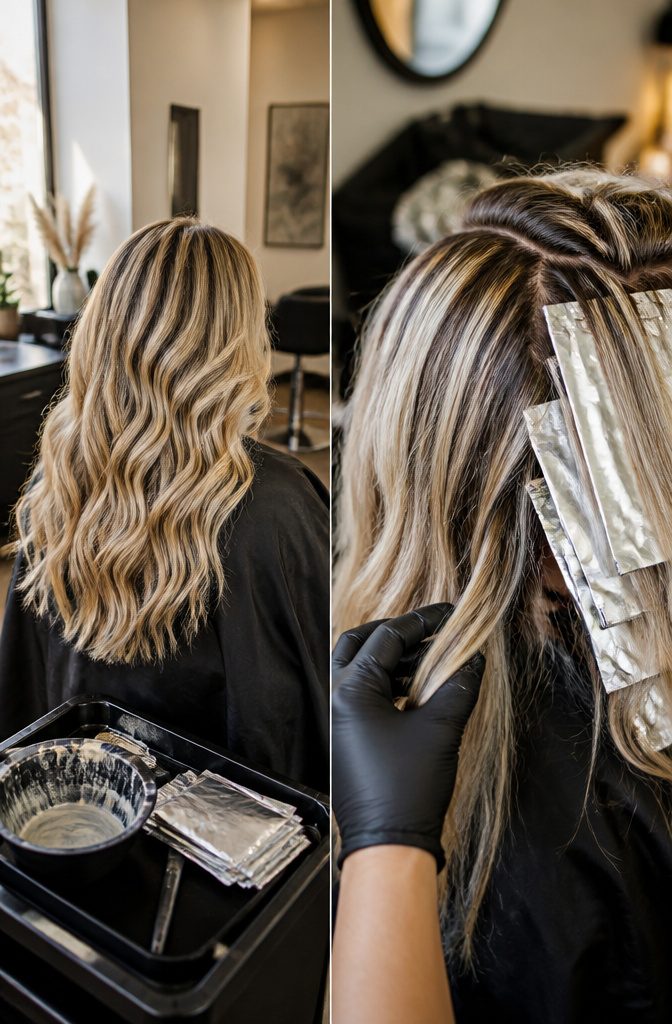
Foilayage puts foil highlights where the eye lands first, around the face and along the part, then paints balayage freehand through the mid-lengths. The foils give brightness up front, and the painted sections keep everything else soft and dimensional.
Balayage is an application method and highlighting is a way of sectioning hair, so the two combine easily. A stylist can also layer foils over balayage, or mix babylights with a balayage application for a subtler, sombré-style blend.
If you want highlight-level brightness without a hard regrowth line, I think foilayage is the practical answer. Ask for it by name: it’s a request, not a default.
Gloss and Root Smudge
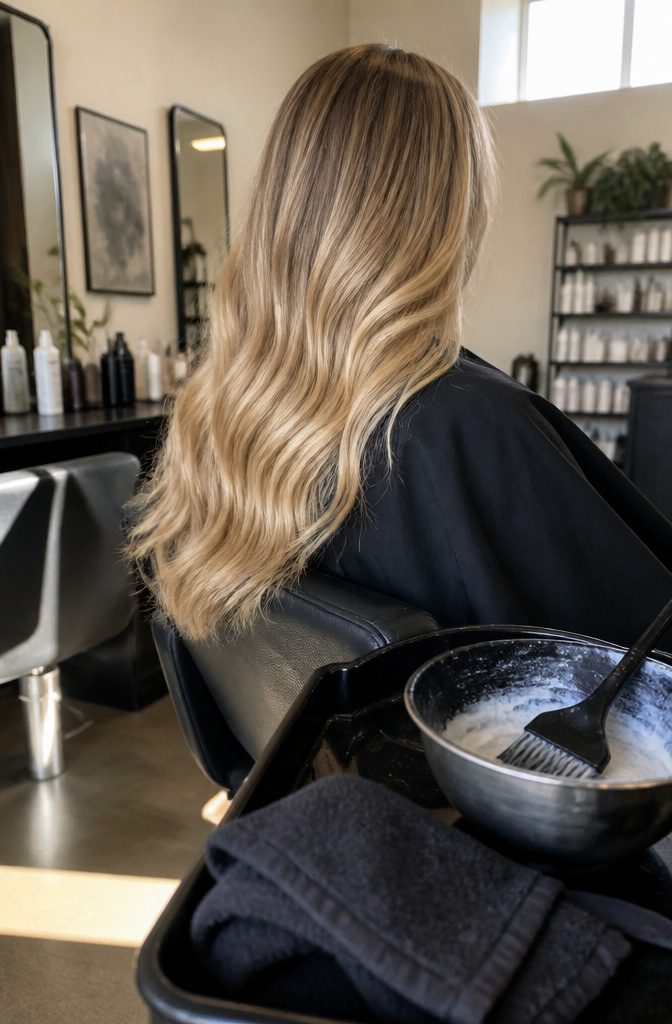
A root smudge or root melt blends the line between your natural root and the lighter color, so regrowth reads as soft shadow instead of a stripe.
Both are add-ons, not part of every service. I’d skip them if you want brightness right at the scalp, because a smudge works by keeping the root deeper.
A gloss is the other add-on, and it works on tone rather than regrowth. Lightening reveals warmth, and a gloss or toner sets the finish: golden, beige, cool or copper.
It fades gradually, so a 30-minute gloss at the 6–8 week mark can extend balayage by weeks, which helps it reach the roughly four months it lasts before bigger maintenance.
A gloss can’t create icy blonde on hair that never lifted light enough.
Gray Blending
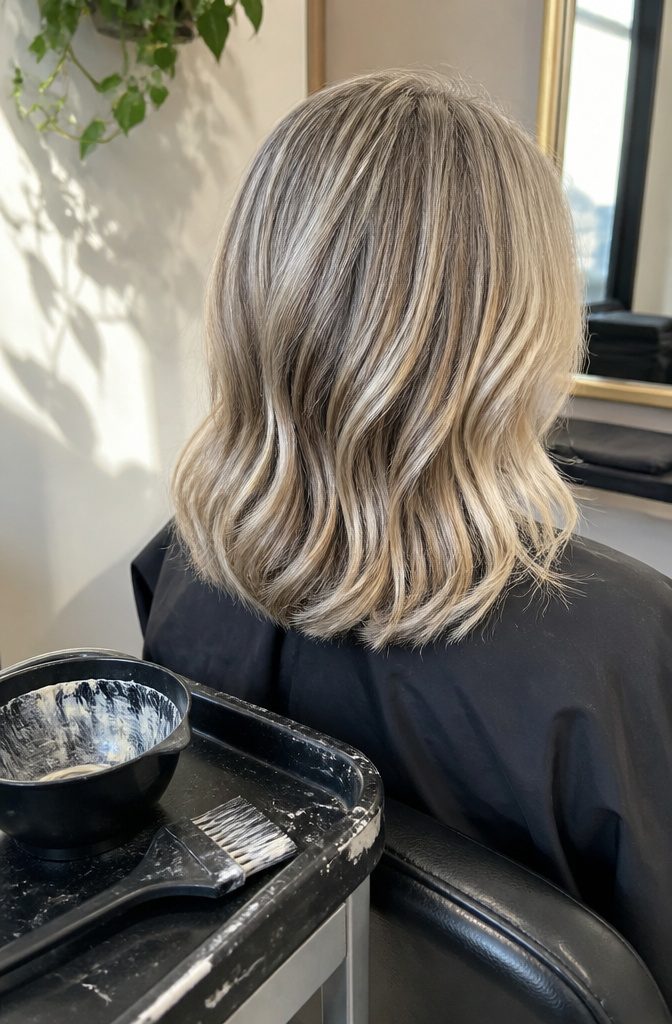
Neither technique covers gray; both blur it. Balayage is painted by hand onto gray strands, which softens the contrast with your natural color without coloring the whole head.
Foil highlights are woven in and saturated root to tip, and they get the credit for the more thorough blend. Balayage is also praised for blending, so this is a split decision rather than a clear win.
My lean depends on what you want to protect.
If low upkeep matters most, go balayage. If you want the most blended result, ask for highlights.
For true full coverage, either one has to be paired with an all-over color. Combining balayage with highlights is a third route if you want a richer, more dimensional look around the gray.
Frequently Asked Questions
Is it better to get balayage or highlights?
It depends on the finish you want.
Highlights suit a bright, even blonde, and balayage suits a soft, lived-in, sun-kissed look. If you want brightness up front without a hard regrowth line, ask for foilayage, which combines the two.
What is the main difference between balayage and highlights?
Balayage is painted freehand, with the lightest color from mid-lengths to ends.
Highlights are usually set in foils and lightened from root to tip, so they read as more defined ribbons of light. Salons sometimes mix both methods, so ask your stylist what will be used.
How often do I need to touch up balayage compared to highlights?
Balayage typically goes 3–5 months between visits, while highlights usually need a touch-up every 6–12 weeks.
Finely woven highlights with root blending can stretch to 12–16 weeks. A 30-minute gloss at the 6–8 week mark can add weeks to balayage.
Is balayage more expensive than highlights?
Yes, per visit.
One published range puts balayage at $150–$400 or more and highlights at $75–$200 or more. Balayage needs fewer touch-ups, so it can cost less over a year.
How long does a balayage appointment take?
Published estimates run from 90 minutes to 3 hours, and one salon quotes 2.5–3.5 hours for a full balayage.
That same salon puts highlights at 1.5–2.5 hours. Hair length, density and starting color all change the time.
Which technique is better for adding volume to thin hair?
Highlights.
Foils add depth and dimension that can make thin hair look fuller. Balayage tends to suit fine, straight hair but keeps more depth near the roots, so a stylist should check your hair in a consult before you choose.
Can balayage cover gray hair?
Not fully.
Balayage blurs gray by softening the contrast with your natural color, and foil highlights usually give a more thorough blend. For true full coverage, either technique has to be paired with an all-over color.
Can I get blonde balayage on dark hair?
Yes, and dark hair eases into lighter tones well with balayage.
Going very light can take more than one appointment, especially if you have previous dark color or box dye. Your colorist may suggest a staged plan.
What are the downsides of balayage?
Balayage costs more per visit and can take up to 3.5 hours in the chair.
It won’t give you brightness right at the scalp, and it doesn’t fully cover gray. An extremely light, cool-toned balayage on a darker base can also grow out harshly, and heavy lightening can still damage hair.